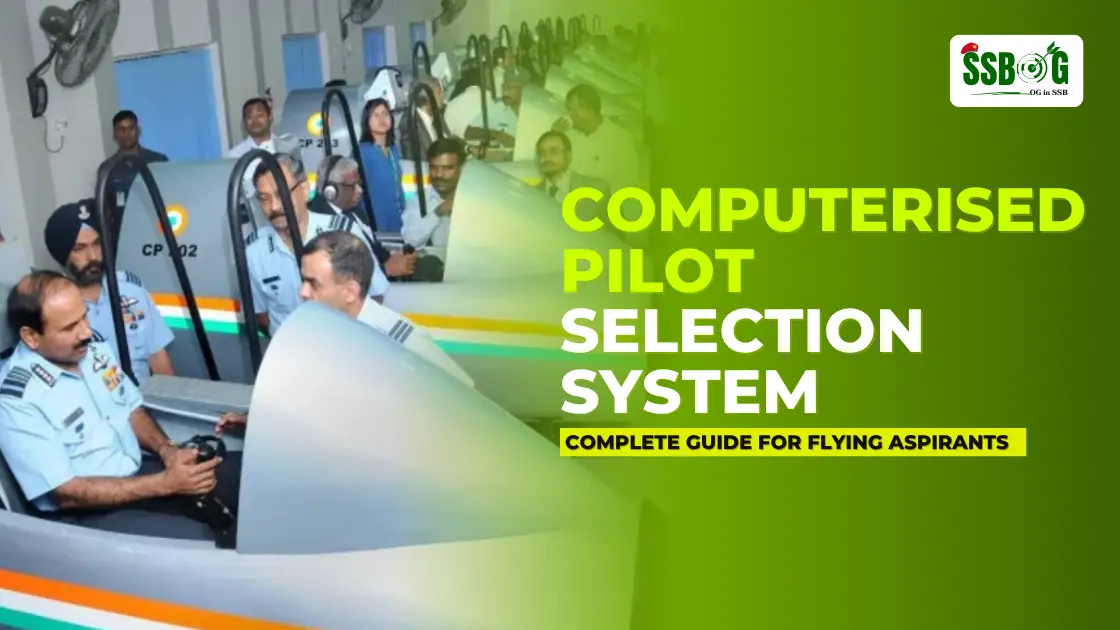
The Computerised Pilot Selection System (CPSS) is the current aptitude testing system conducted at the Air Force Selection Board for candidates aspiring to become pilots in the Indian Armed Forces.
Earlier known as PABT (Pilot Aptitude Battery Test), the system has now been fully computerised.
However, its purpose remains the same – to assess whether a candidate has the natural aptitude required for flying
What Is CPSS?
CPSS is a battery of scientifically designed tests that evaluate whether a candidate possesses essential pilot qualities such as:
- Reflexes
- Coordination
- Judgment
- Presence of mind
- Ability to perform under stress
These qualities are considered largely innate, meaning they cannot be significantly developed if absent, although familiarity with the process can improve performance
Why CPSS Is Conducted
Flying is a high-risk profession where:
- Quick decisions are critical
- Precision is essential
- Situational awareness must be constant
During World War II, research showed that not all individuals could perform effectively as pilots, even after training.
This led to the development of aptitude testing systems like PABT, now CPSS, to ensure that only candidates with the required natural abilities are selected
Who Has To Appear For CPSS?
All candidates aspiring to become pilots must undergo CPSS.
It is:
- Conducted only at AFSB
- Applicable for:
- Indian Air Force Flying Branch
- Army Aviation
- Naval Aviation
Even candidates from Army or Navy are sent to AFSB, as only the Air Force has the required testing facility
One-Time Rule (Very Important)
CPSS can be attempted only once in a lifetime.
- If you qualify → Eligible for pilot roles
- If you do not qualify → Permanently ineligible
This rule exists because the test evaluates core aptitude required for flying
Structure Of CPSS
CPSS is fully computerised, but it evaluates three core abilities:
1. Instrument Interpretation Ability
You are shown digital representations of aircraft instruments and must interpret them quickly.
These include:
- Direction (Compass)
- Speed (Air Speed Indicator)
- Altitude (Altimeter)
- Aircraft orientation (Artificial Horizon)
- Climb or descent indicators
This tests your ability to read multiple instruments and make quick decisions, which is essential in flying
2. Sensory-Motor Coordination
In this test, you control a simulated aircraft using control inputs.
You must:
- Maintain alignment with a given path
- Respond to changes and disturbances
- Coordinate hand, foot, and visual inputs
This evaluates hand-eye-foot coordination and control under dynamic conditions
3. Control And Stability Ability
This part assesses your ability to:
- Maintain smooth control
- Avoid overcorrection
- Ensure stability under changing conditions
This reflects real flying situations where precise and balanced control is critical
What CPSS Actually Measures
CPSS evaluates:
- Reaction time
- Coordination and motor skills
- Situational awareness
- Precision of control
- Ability to perform under pressure
These qualities are essential for handling:
- High-speed aircraft
- Turbulence
- Sudden changes in flight conditions
Can You Prepare For CPSS?
There is no formal coaching available for CPSS because it is based on natural aptitude
However, you can improve your readiness by:
- Staying calm under pressure
- Improving focus and concentration
- Practising coordination-based activities
Awareness of the test helps improve confidence and performance.
Result And Qualification
CPSS is a qualifying test, not merit-based.
- No marks or scores are disclosed
- Candidates are only informed whether they have qualified or not
- Qualification is mandatory for consideration in Flying Branch
Common Mistakes To Avoid
Many candidates underperform due to approach, not ability.
Avoid:
- Panic during tests
- Overcorrecting controls
- Rushing unnecessarily
- Losing focus midway
Maintain calm and controlled responses throughout.
CPSS is designed to ensure that only candidates with the right natural aptitude enter flying roles.
It protects both:
- The candidate
- The service
Flying demands precision, control, and mental stability, and even small errors can have serious consequences.