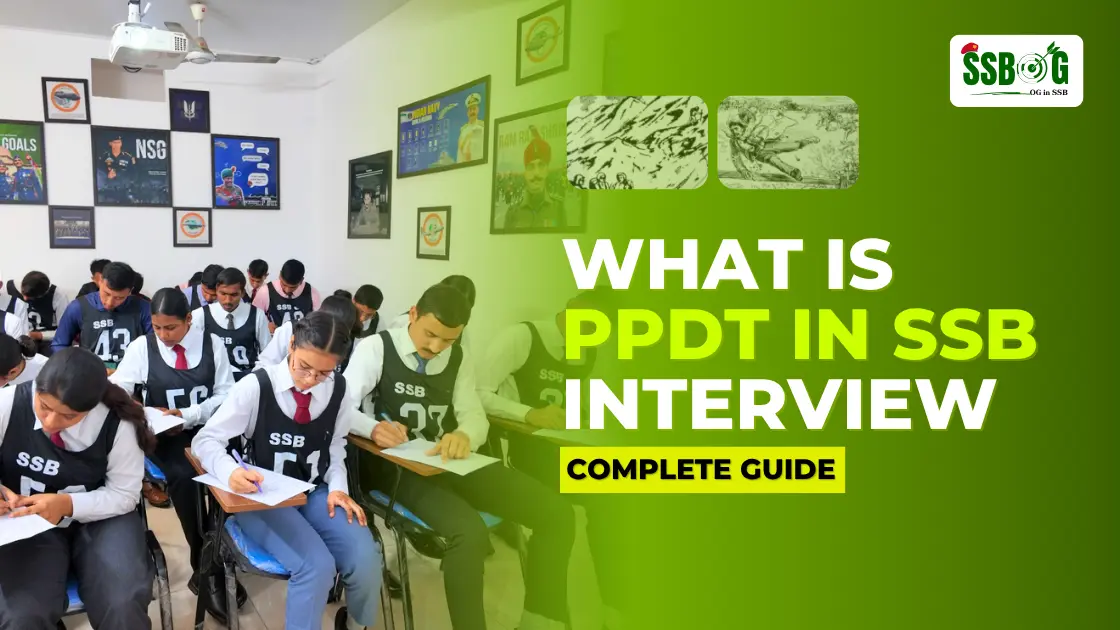
The Picture Perception and Discussion Test (PPDT) is a screening test conducted as part of the SSB Interview process for officer selection into the Indian Armed Forces, including the Indian Army, Indian Navy, and Indian Air Force.
It is conducted during Stage 1 screening, It evaluates how candidates perceive situations, structure their thoughts, and function within a group setting under time constraints.
It is designed to assess your observation skills, clarity of thought, communication, confidence, and officer-like qualities (OLQs) under pressure.
What Happens In PPDT?
The PPDT consists of two main parts: Individual story writing (Picture Perception) and Group discussion (Discussion Test).
1. Picture Perception
You are shown a blurred image for about 30 seconds.
You must quickly observe and create a story around it.
You are required to note:
- Number of characters
- Age, gender, and mood of the main character
- What is happening in the scene
- What led to the situation and what will happen next
2. Story Writing (4 minute)
You get around 4 minutes to write your story.
It should be short, logical, and focused.
3. Narration & Group Discussion
In the second phase, candidates are divided into small groups, typically consisting of 12–15 individuals. Each candidate narrates their story in approximately 1 minute.
Following individual narration, the group engages in a discussion aimed at arriving at a common story.
The discussion is observed by trained assessors from the Services Selection Board, who evaluate candidates on various psychological and behavioural parameters.
How to write PPDT Story?
Step 1: Fill Basic Details
You are first given a form where you must fill in your basic details such as:
- Name
- Chest number
- Other required information
This part should be done neatly and quickly.
Step 2: Character Identification Box
Next to your details, there is a box where you analyse the picture.
Here, you must mention all the characters you see.
For each character, write:
- Mood
- Age (in numbers)
- Gender (M/F)
Use this standard notation:
- + → Positive mood
- 0 → Neutral mood
- – → Negative mood
Example:
- +
22
M
You must also circle the main character.
Step 3: Action Part:
Write the action part. Observe the picture carefully and frame the action yourself
Step 4: Story Writing (20–60–20 Format)
Your story should follow a clear 3-part structure:
1. First 20% – Introduction
- Introduce the main character
- Mention background and setting
- Keep it short and clear
2. Middle 60% – Action
- This is the most important part
- Explain what actions the character takes
- Show decision-making, responsibility, and problem-solving
3. Last 20% – Outcome & Perspective
- Write the result of actions
- Include:
- Short-term outcome (immediate result)
- Long-term perspective (future impact)
This final part shows your vision and planning ability, which is very important for assessing officer-like qualities.
PPDT Sample Story:
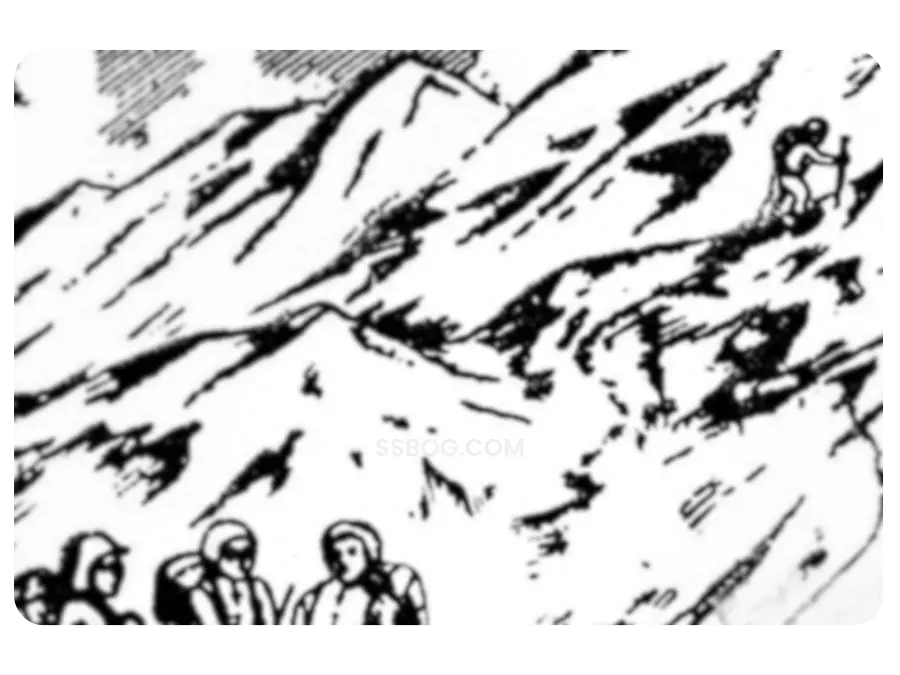
Quick Guide:
Identify this as a trekking situation. Choose the person climbing ahead as the main character, show leadership, safety awareness, and team coordination, and ensure a calm, successful crossing of the difficult terrain.
Character:
+
24
M (Main)
+
23
M
+
22
M
Story:
Aman, a 24-year-old trekking leader, was guiding his team through a mountainous route during an expedition.
On reaching a steep and risky section, he assessed the path and climbed ahead to check safety. He identified stable footholds and instructed the team to follow one by one while maintaining distance. He ensured proper coordination, used available support like sticks, and motivated the team to stay calm and focused during the climb.
The team successfully crossed the difficult patch and continued the trek safely. His leadership ensured a smooth and well-managed expedition.
PPDT Sample Story:
Quick Guide:
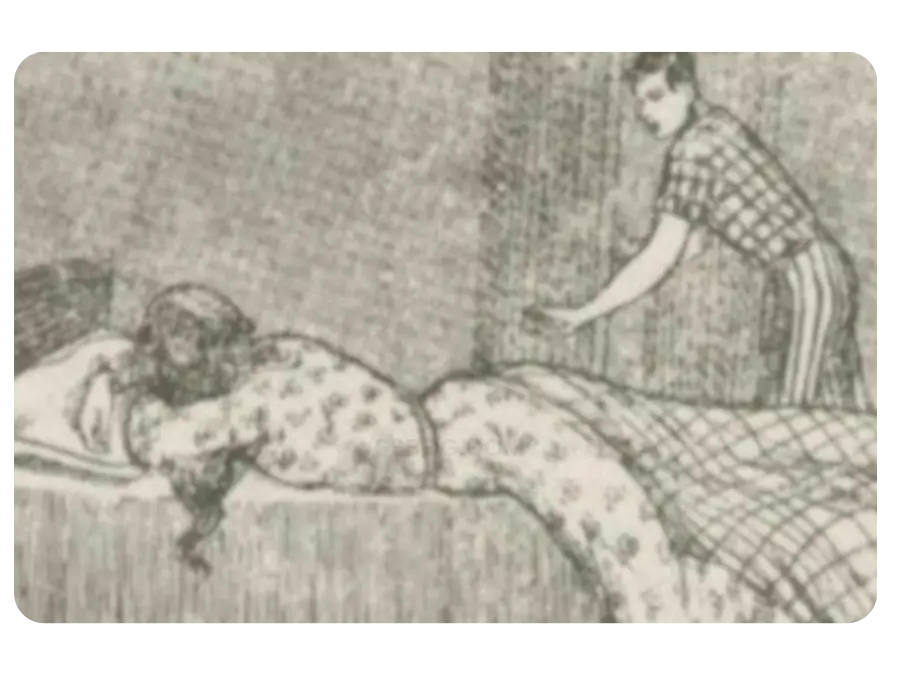
Identify this as a home or medical situation. Choose the standing boy as the main character, show concern, responsibility, and quick action, and ensure a calm and positive outcome.
Character:
+
18
M (Main)
–
16
F
Story:
Rahul, an 18-year-old student, noticed his younger sister lying unwell on the bed at home.
Understanding that she was not feeling well, he checked her condition and immediately informed his parents. He arranged basic care, ensured she was comfortable, and helped in taking her to a nearby doctor for proper treatment. He stayed calm and supported his family during the situation.
With timely medical attention, she recovered soon. His responsible and caring behaviour ensured proper handling of the situation and brought relief to the family.
Practice More sample PPDT images – click here
Disclaimer: The pictures used in this material are only for practice purposes. In the actual PPDT, images are usually hazy, blurred, and shown for a very short duration, so they may appear different. These samples are designed to help you understand the approach and improve your performance.